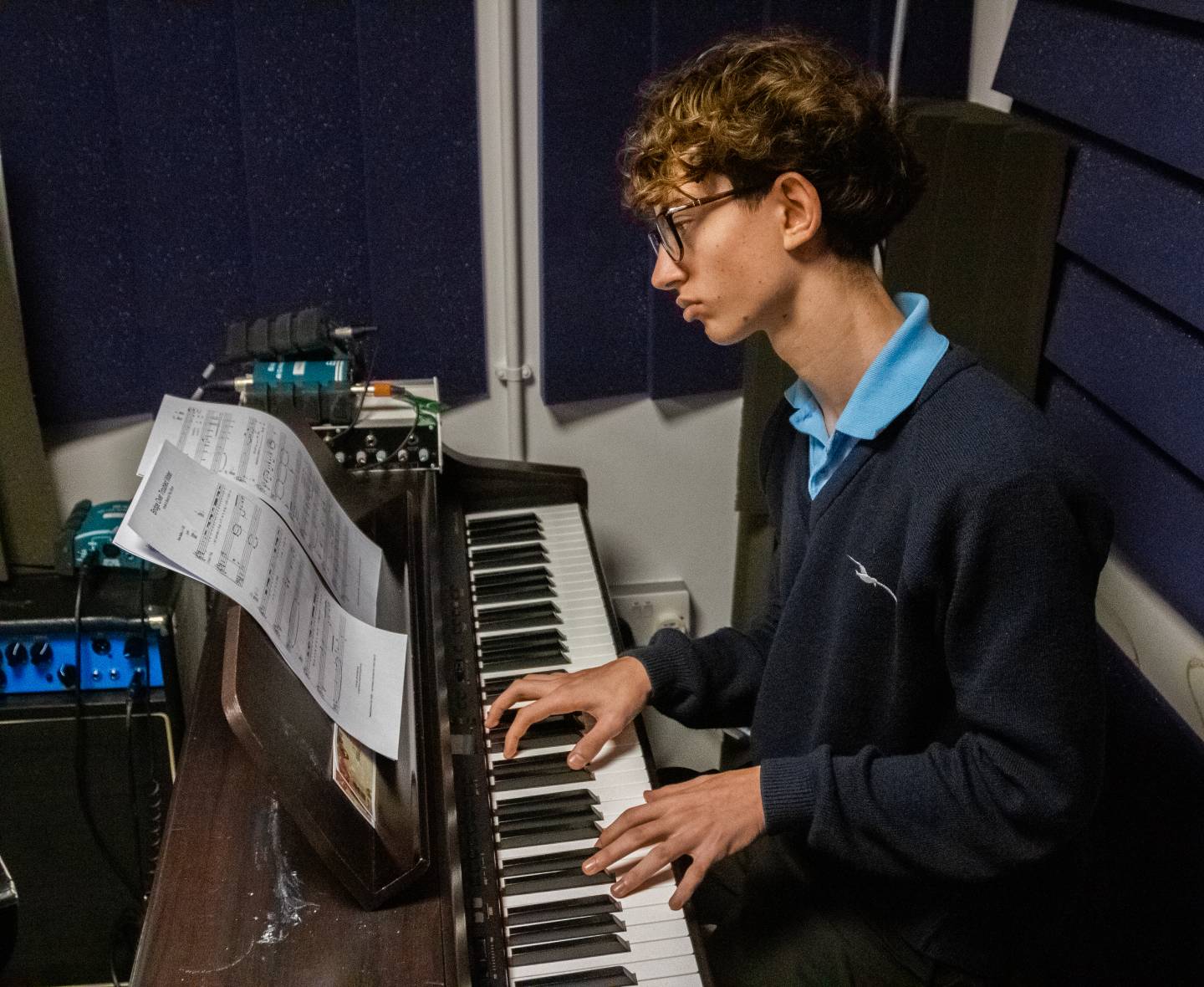

Jo Richardson’s music curriculum aims to build a lifelong love of music by developing practical and analytical skills through performing, composing, listening, and appraising for all students regardless of background and prior musical experience.
Curriculum
Core Purpose and Vision
- Inspire engagement: Foster a passion for music and confidence as musicians across all student abilities and backgrounds.
- Ensure equality: Provide a complete, fulfilling musical foundation in Key Stage 3 that matters for every learner, whether they study GCSE or not.
- Build transferable skills: Encourage discipline, teamwork, creative thinking, and resilience through practical music-making.
Key Pillars of the Curriculum
- Performing: Develop fluency and control of live instruments and voice, both as soloists and within ensembles.
- Composing: Teach the structural building blocks of music, using live instruments and music technology to manipulate ideas and devices.
- Listening and Appraising: Deepen understanding of the core musical elements (pitch, rhythm, tempo, timbre, texture, structure, harmony) across diverse styles, genres, and historical traditions.
Key Stage 3
The key stage three curriculum in built in a linear model, with the skills learnt in each unit being expanded on and developed throughout the three year programme
In Year 7 we study:
- Unit one: Entry Unit
- Unit two: Rhythm Notation
- Unit three: Singing and Keyboard skills
- Unit four: Instruments of the Orchestra
- Unit five: entry to Music technology
In Year 8 we study:
- Unit six: Melody and Harmony
- Unit seven: Tone Poems
- Unit eight: Indian Classical music
- Unit nine: Film Music Pt1
- Unit ten: Film Music Pt2
In Year 9 we study:
- Unit eleven: Popular music
- Unit twelve: World Rhythms
- Unit thirteen: The Blues
- Unit fourteen: Reggae Unit fifteen: Hooks and riffs and final Project
Key Stage 4
Key Stage four students study the OCR G.C.S.E syllabus which has five areas of study. The course is split into three components, two of which are NEA coursework modules. The course is designed to stretch and challenge musicians off all abilities whilst opening them up to a new world of music listening, apprising and appreciation.
01 = Integrated portfolio = 30%
1 solo performance
1 original composition
03 = Practical Component = 30%
1 group performance
1 composition from OCR set briefs
05 = Listening and analysis paper = 40%
AOS1: My Music
Focuses directly on the practical exploration and study of your own chosen instrument or medium
AOS2: The Concerto through time
Explores how the concerto genre has evolved across three main historical periods: the Baroque period, the Classical period, and the Romantic period
AOS3: Rhythms of the World
Explores traditional and contemporary music from distinct global regions and cultures
AOS4: Music for film and game
Focuses on enhancing the narrative, creating atmosphere, building tension, indicating character emotions, and establishing time and place
AOS5: Conventions of pop
Explores popular music genres, their key musical features, instrumentation, and production techniques
All components are studied over a two-year period.
Enrichment
The music department offers a wide range of extra-curricular activities for students at Jo Richardson. We regularly put on performances and showcases displaying the best talents of our students and attend concerts throughout the borough and wider city of London. Our clubs offer a wide range of musical activities for all levels and include:
- Wind Band
- Orchestra
- Vocal Group
- Jazz Band
- KS3 Keyboard Club
- KS4 Rock Band
We also offer a range of 1-1 or small group instrumental provision to students FREE OF CHARGE. These instruments include:
- Woodwind – clarinet, flute, oboe, saxophone
- Brass – Trumpet, Tuba, Horns, Trombone
- Strings – Violin, viola, Cello, Double Bass
- Piano/Keyboards
- Electric/Acoustic guitar
- Bass guitar
- Drums
- Vocals
The music department also runs two distinct Music Achieve days in Year 9 where students get the opportunity to partake in workshops exploring the following areas:
- Vocal expression and use
- Beatboxing
- Samba
- African Drumming
- Rock Band
Marking Policy
At the core of our approach to marking at JRCS in in task marking and performance assessment.
In non-practical subjects one substantial piece of work will be task marked at least once every six-eight hours of teaching. Students will respond to the tasks, and they will be checked by staff. In between that time students’ work may be peer or self-assessed or briefly checked by staff. Oral Marking takes the most precedent with constant teacher feedback during practical activities for students to immediately correct and respond to improve the quality of the work.
Levelling and Assessment
KS3
To develop a growth mindset and reflect ‘life after levels’ work in KS3 booklets will not usually be levelled; assessment will be formative and highlight how students can improve. Students will record areas of strength and development on their ‘unit sheets’ which will be at the front of a booklet. At the end of each unit a level is reported for students which reflects all their work over that term inc. any performance/compositional assessments.
KS4
KS4 practice booklets and exam questions and mock exams are likely to be graded. This work might not be in student books. Students will record grades and areas of strength and development in their ‘unit sheets’ which will be at the front of the booklets. All students receive an attainment and predicted grade at the end of each term.
Further Information
The Music Department follows the whole school marking policy, with Assessment for Learning and reflection at the heart of what we do. Students work is marked and assessed, and students have the opportunity to have peer and 1:1 feedback on their work with the focus being how they can learn from any marked work to improve their own abilities.